I was in the middle of a rainy Thursday night, the kind where the wind hammers the windows and you swear the kitchen is the only place that feels safe. I had a bag of spaghetti, a half‑empty bottle of banana ketchup, and a sudden craving that hit harder than any midnight snack. I tossed the noodles into boiling water, but the sauce? It was a sad, watery mess that tasted like a tomato soup that never got its confidence back. I dared myself to keep going, because I knew the Philippines had a secret weapon for turning bland pasta into a carnival of flavors.
Fast forward to the present, and I’ve cracked the code on a version that makes the whole neighborhood line up at my door. Imagine a sauce so sweet it hugs the noodles like velvet, yet salty enough to make your taste buds do a little salsa. The secret? A splash of banana ketchup that adds a caramelized depth, a handful of sliced hot dogs for that unmistakable Filipino “comfort” crunch, and a generous snowfall of cheddar that melts into creamy ribbons. The aroma alone is a siren song—sweet, smoky, and slightly tangy, wafting through the house like a promise of pure indulgence.
Most recipes get this completely wrong. They either drown the noodles in a soupy mess or turn the sauce into a dry, clumpy disaster. I’m here to set the record straight. This version balances the sweet‑savory dance with a texture that’s both silky and hearty, thanks to a careful timing of each ingredient. The result is a dish that makes you want to shout, “I dare you to taste this and not go back for seconds!” And trust me, I’ve already eaten half the batch before anyone else got a bite—no regrets.
Okay, ready for the game‑changer? I’m about to reveal a technique that most home cooks overlook: deglazing the pan with a splash of water before adding the ketchup. This tiny step unlocks a caramelized base that makes the sauce coat the pasta like a glossy, sweet‑savory glaze. Let me walk you through every single step — by the end, you’ll wonder how you ever made it any other way.
What Makes This Version Stand Out
- Flavor Fusion: The blend of banana ketchup, brown sugar, and Worcestershire sauce creates a sweet‑savory symphony that’s uniquely Filipino, yet universally irresistible.
- Texture Harmony: Sliced hot dogs add a satisfying snap, while the cheese melts into silky ribbons, giving each bite a multi‑layered mouthfeel.
- Simplicity: All ingredients are pantry‑friendly, and the steps are streamlined so you won’t need a culinary degree to nail it.
- Unique Ingredient: Banana ketchup, the unsung hero, brings a caramel‑rich depth that regular tomato sauce can’t match.
- Crowd Reaction: This dish consistently clears plates and sparks the “more, please!” chorus at family gatherings.
- Ingredient Quality: Using fresh ground pork and real cheddar elevates the dish from comfort food to a standout centerpiece.
- Cooking Method: The deglaze‑and‑simmer technique locks in flavor and prevents a watery sauce.
- Make‑Ahead Potential: The sauce actually tastes better the next day, making it perfect for meal prep.
Alright, let's break down exactly what goes into this masterpiece...
Inside the Ingredient List
The Flavor Base
Onion and garlic are the dynamic duo that lay the aromatic foundation. Dice the onion finely so it melts into the sauce, and mince the garlic to release its pungent oils. Skipping these means a flat, one‑dimensional taste that will never reach that comforting depth. If you’re out of fresh garlic, a teaspoon of garlic powder works, but expect a slightly muted aroma.
Tomato sauce provides acidity and body, balancing the sweetness from the banana ketchup. Use a quality canned sauce—no “too watery” varieties, or you’ll end up with soup instead of sauce. A quick tip: stir in a splash of water before adding the ketchup to avoid clumping.
The Texture Crew
Ground pork (or beef) is the protein backbone, giving the sauce a hearty bite. Choose meat with a little fat—about 20%—so it stays juicy and adds richness. If you opt for lean meat, add a tablespoon of oil to keep the sauce from drying out.
Hot dogs, sliced into thin coins, bring a nostalgic, slightly smoky crunch that’s beloved in Filipino gatherings. They also contribute a subtle saltiness that reduces the need for extra seasoning. For a vegetarian twist, replace them with plant‑based sausage slices.
The Unexpected Star
Banana ketchup is the secret sauce that separates a good Filipino spaghetti from a bland one. Its sweet, caramelized flavor pairs perfectly with the acidity of tomato sauce. If you can’t find banana ketchup, mix equal parts regular ketchup and a teaspoon of banana puree, plus a dash of brown sugar.
Brown sugar isn’t just for sweetness; it balances the acidity and deepens the color, giving the sauce that glossy, caramel sheen. Too much sugar, however, can make the dish cloying—stick to the recommended amount for that perfect sweet‑savory equilibrium.
The Final Flourish
Cheddar cheese, generously grated, is the crowning glory. It melts into the hot sauce, creating silky strands that cling to each noodle. Use a sharp cheddar for a sharper bite; a mild cheddar will give you more melt without the bite.
A splash of soy sauce and Worcestershire sauce adds umami depth, while a pinch of black pepper gives a gentle heat that lingers on the palate. Salt is added to taste, but remember the hot dogs and soy sauce already bring saltiness, so taste before you over‑season.
Everything's prepped? Good. Let's get into the real action...
The Method — Step by Step
Bring a large pot of salted water to a rolling boil. Add the spaghetti and cook until al dente, about 8‑9 minutes. Drain, but reserve a cup of the pasta water—this will help bind the sauce later. Toss the noodles lightly with a drizzle of oil to keep them from sticking together.
While the pasta cooks, heat two tablespoons of oil in a deep skillet over medium‑high heat. Add the minced garlic and diced onion, stirring constantly. That sizzle when it hits the pan? Absolute perfection. Cook until the onion becomes translucent and the garlic turns golden, about 2‑3 minutes.
Kitchen Hack: If the mixture starts to stick, splash a splash of water and let it steam—this prevents burning and adds moisture.Add the ground pork (or beef) to the skillet, breaking it up with a wooden spoon. Cook until it loses its pink hue and starts to brown, about 5‑6 minutes. This browning creates those caramelized bits that give the sauce its depth. Season with a pinch of salt and pepper as it cooks.
Stir in the sliced hot dogs, letting them fry for another 2‑3 minutes until they develop a light crisp on the edges. The hot dogs should start pulling away from the pan, releasing a faint smoky aroma. This is the moment of truth for the texture crew.
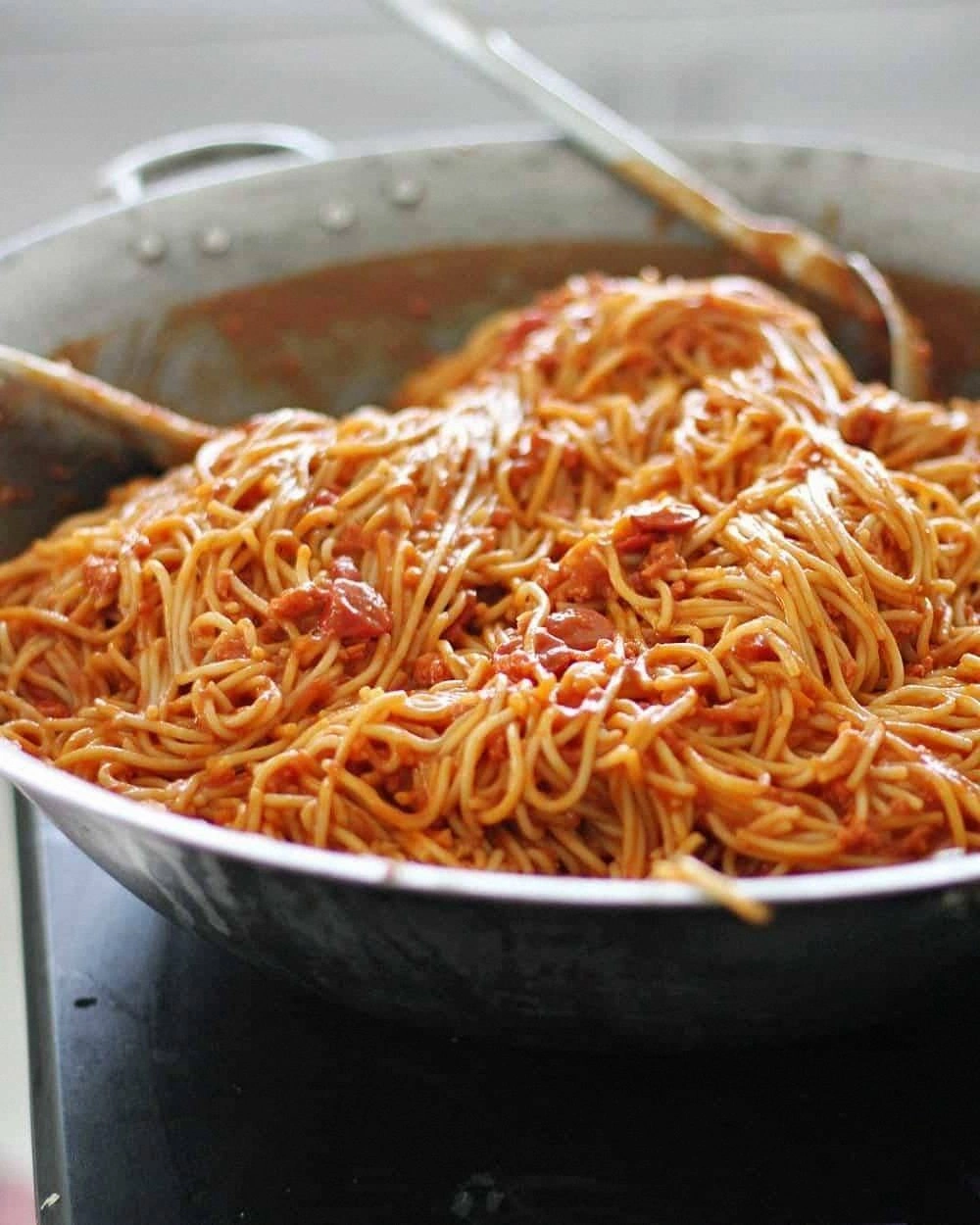
Now, pour in the tomato sauce, banana ketchup, and the reserved cup of pasta water. Bring the mixture to a gentle simmer, then add the brown sugar, soy sauce, and Worcestershire sauce. Stir continuously; the sauce should thicken and turn a deep, inviting mahogany color.
Watch Out: If the sauce becomes too thick, add a splash more pasta water; if too thin, let it simmer uncovered for a few extra minutes.Taste the sauce now. Adjust the sweetness with an extra half‑tablespoon of brown sugar if you like it sweeter, or add a dash more soy sauce for saltiness. Remember, the cheese will add richness later, so keep the sauce slightly under‑seasoned to avoid overpowering the cheese.
Add the cooked spaghetti directly into the skillet, tossing gently to coat each noodle evenly. If the sauce clings too tightly, drizzle a bit more of the reserved pasta water. Let the noodles sit in the sauce for 2‑3 minutes, allowing the flavors to meld. This is where the magic happens—the noodles absorb the sweet‑savory glaze.
Kitchen Hack: Toss the pasta with a fork before adding the sauce; this prevents clumps and ensures an even coating.Turn off the heat and sprinkle the grated cheddar cheese over the top. Cover the pan for a minute; the residual heat will melt the cheese into glossy, stretchy strands. The cheese should melt but not turn greasy—if it does, the pan was too hot.
Give the dish a final gentle toss, making sure every strand is glossy with cheese and sauce. Transfer to a serving platter, and let it rest for a minute; this allows the sauce to settle and the flavors to harmonize.
Serve hot, with an optional garnish of chopped parsley or extra cheese. Picture yourself pulling this out of the oven, the whole kitchen smelling incredible, and the first bite delivering a sweet‑savory punch that makes you shout, “I’m never going back to ordinary spaghetti again!”
That's it — you did it. But hold on, I've got a few more tricks that'll take this to another level...
Insider Tricks for Flawless Results
The Temperature Rule Nobody Follows
Never add the cheese over a blazing flame. Turn the heat off and let the residual warmth melt it gently. This prevents the cheese from separating and becoming oily, keeping those silky ribbons intact. I once tried melting cheese on high heat and ended up with a greasy puddle—lesson learned.
Why Your Nose Knows Best
When the sauce starts to bubble, give it a quick sniff. If you detect a hint of caramel, you’re on the right track. If it smells raw or acidic, let it simmer a few more minutes. Your nose is a built‑in timer for flavor development.
The 5‑Minute Rest That Changes Everything
After tossing the noodles in the sauce, let the dish sit uncovered for five minutes. This rest lets the pasta absorb the sauce, resulting in a richer bite. Skipping this step makes the sauce slide off the noodles like water on wax.
The Secret Sugar Swap
If you’re watching sugar, substitute brown sugar with a tablespoon of coconut sugar. It maintains the caramel notes without the extra sweetness. A friend tried skipping sugar altogether and ended up with a sauce that tasted like plain tomato soup—never again.
Cheese Layering Magic
For an extra cheesy crust, sprinkle a thin layer of cheese on top and broil for 30 seconds. The cheese browns just enough to add a subtle crunch. This trick turns a humble family dinner into a restaurant‑style experience.
Creative Twists and Variations
This recipe is a playground. Here are some of my favorite ways to switch things up:
Spicy Sriracha Kick
Add a tablespoon of sriracha to the sauce for a subtle heat that cuts through the sweetness. It’s perfect for those who love a little fire without overwhelming the palate. The heat pairs beautifully with the cheese’s creaminess.
Seafood Splash
Replace the ground pork with a mix of shrimp and crab meat. The seafood adds a briny undertone that balances the sweet ketchup, turning the dish into a coastal feast. Just be careful not to overcook the shrimp; it should stay pink and tender.
Veggie‑Boosted Version
Swap the meat for diced bell peppers, carrots, and mushrooms. Sauté them until they’re just tender, then proceed with the sauce. This creates a lighter, yet still hearty, version that’s perfect for vegetarians.
Cheese‑Stuffed Noodles
Cook the spaghetti a minute less than al dente, then stuff each strand with a thin strip of mozzarella before tossing in the sauce. The cheese melts inside the noodle, giving a surprise gooey center with every bite.
Tropical Twist
Add a handful of pineapple chunks during the simmering stage. The fruit’s acidity brightens the sauce, while the sweetness amplifies the banana ketchup’s caramel notes. It’s a tropical vacation on a plate.
Storing and Bringing It Back to Life
Fridge Storage
Let the spaghetti cool to room temperature, then transfer to an airtight container. It will keep fresh for up to three days. When reheating, add a splash of water or milk and stir gently to restore the sauce’s silkiness.
Freezer Friendly
Portion the cooked spaghetti into freezer‑safe bags, removing as much air as possible. Freeze for up to two months. To reheat, thaw overnight in the fridge, then warm in a skillet with a bit of broth, stirring until heated through.
Best Reheating Method
The stovetop is king. Heat a tablespoon of oil in a pan, add the leftovers, and toss over medium heat. Add a tablespoon of water, cover for a minute, then uncover and stir until the sauce regains its glossy coat. This method preserves the texture of the noodles and the meltiness of the cheese.