I was in a frantic rush after a late‑night work marathon, my pantry a chaotic jumble of forgotten jars and half‑used ingredients. I stared at a bag of orzo, a handful of fresh spinach, a jar of artichoke hearts, and a block of cream cheese that had been sitting on the counter for weeks. I thought, “I’ll just toss everything together and hope for the best.” The result was a soggy, flavorless mess that could have been labeled “experimental.” That night, I made a promise to myself: I would turn that disaster into the most comforting, crowd‑pleasing dish ever made in a single pan.
The next morning, I set the stove to medium, poured a splash of olive oil, and watched the oil shimmer like liquid gold. The first sizzle of garlic in the pan released a perfume so rich it made my kitchen feel like a Mediterranean trattoria. The spinach began to wilt, its bright green veins turning translucent, while the artichokes added a subtle, almost citrusy tang that lifted the entire dish. I could already taste the creamy sauce coating each grain of orzo like velvet, the Parmesan melting into a glossy, nutty glaze. It was a sensory symphony—sizzling, fragrant, and irresistibly inviting.
I dared myself to taste the mixture before the orzo finished cooking, and the first bite was a revelation. The sauce was thick enough to cling to the pasta, yet light enough to glide across the tongue. The artichokes offered a slight bite, breaking the creamy monotony, while the spinach contributed a fresh, earthy undertone. I laughed at how a simple combination of pantry staples could transform into something so luxurious. I was honest—this dish was so good that I devoured a third of the batch before the first guest even arrived.
Most people think orzo is just a side, but here it becomes the star, soaking up a sauce that’s richer than a traditional risotto. I’ve tried countless versions of creamy spinach pasta, but none of them had the same silky texture or the perfect balance of salt and pepper. The secret lies in the harmony between the creamy cheeses and the savory broth, the precise timing of the sauté, and the choice of fresh spinach over frozen. The result? A dish that feels indulgent yet wholesome, and that will have everyone asking for seconds. I dare you to taste this and not go back for seconds.
Picture yourself pulling this out of the oven, the kitchen smelling incredible, and the table set for a family dinner that feels like a holiday. The golden edges of the orzo will crackle just enough to give a satisfying crunch. The sauce will swirl like a cloud of cream, coating every bite. And you’ll wonder how you ever made it any other way. Let me walk you through every single step—by the end, you’ll wonder how you ever made it any other way.
What Makes This Version Stand Out
- Flavor: The combination of cream cheese and Parmesan creates a double‑layered richness that’s both silky and nutty, without overpowering the greens.
- Texture: The orzo cooks to al dente perfection, providing a subtle chew that contrasts with the soft spinach and tender artichokes.
- Simplicity: One pan, one pot, and one sheet of parchment—no cleanup, no fuss.
- Uniqueness: The artichokes add a surprising depth of flavor that sets this dish apart from typical spinach pasta.
- Crowd Reaction: Friends rave that it tastes like a gourmet restaurant dish, yet it’s made with pantry staples.
- Ingredient Quality: Using fresh spinach and high‑quality cream cheese elevates the dish to a new level of indulgence.
- Cooking Method: The sauté‑then‑bake technique locks in moisture and flavor, ensuring every bite is uniformly creamy.
- Make‑Ahead Potential: This dish can be prepared ahead, reheated, and still taste fresh, making it ideal for busy weeknights.
Alright, let’s break down exactly what goes into this masterpiece…
Inside the Ingredient List
The Flavor Base
The foundation of this dish is the aromatic combination of garlic, olive oil, and broth. The garlic is minced finely so that its flavor releases quickly, creating a fragrant base that permeates the entire pan. Olive oil acts as a conductor, allowing the garlic to sauté without burning while adding a subtle fruity note. The broth, whether chicken or vegetable, provides the liquid that cooks the orzo and dissolves the cheeses into a silky sauce. Skipping the broth will result in a dry, clumpy mess; it’s the liquid that ties all the flavors together.
The Texture Crew
Orzo pasta is the star of the texture crew. Its small, rice‑shaped grains are perfect for absorbing sauces while maintaining a firm bite. Fresh spinach adds a burst of moisture and a slightly earthy flavor that balances the richness of the cheeses. Artichoke hearts bring a tender, slightly tangy bite that cuts through the creaminess, preventing the dish from feeling too heavy. Together, these ingredients create a harmonious mouthfeel that’s both comforting and satisfying.
The Unexpected Star
Cream cheese might seem like an ordinary ingredient, but its role here is crucial. It melts into a velvety sauce that coats the pasta, providing a luxurious mouthfeel. The creamy texture contrasts beautifully with the crispness of the orzo and the bite of the artichokes. If you’re dairy‑free, you can substitute a plant‑based cream cheese, but the texture may differ slightly. The key is to melt it slowly to avoid separation.
The Final Flourish
Parmesan cheese adds a sharp, nutty flavor that enhances the creamy mixture. It also provides a slightly crunchy texture when grated on top, especially if you finish the dish with a quick broil. Salt and pepper are the final touch, balancing the dish’s richness and brightening the flavors. Remember, seasoning is an art—taste as you go and adjust accordingly. If you’re using a lower‑sodium broth, you might want to add a pinch of salt to compensate.
Everything’s prepped? Good. Let’s get into the real action…
The Method — Step by Step
- Heat the Pan: Place a large, oven‑safe skillet over medium heat and add 2 tablespoons of olive oil. Let the oil heat until it shimmers—no smoke, just a warm, inviting glow. This step is crucial; a properly heated pan ensures even sautéing and prevents the garlic from burning. When the oil is ready, you’ll hear a gentle sizzle as the garlic hits it.
- Sauté the Garlic: Add the minced garlic to the pan and cook for 30 seconds, stirring constantly. The garlic should release a sweet, nutty aroma without turning brown. This quick sauté locks in the garlic’s flavor without giving it a bitter edge. Watch the garlic closely—once it starts to turn golden, it’s time to move on.
- Introduce the Spinach: Toss in the fresh spinach, a handful at a time, letting it wilt before adding more. The spinach will reduce in volume dramatically, so don’t be alarmed by the sudden change. As it wilts, it releases a faint, earthy scent that mingles with the garlic. Stir until the spinach is evenly coated with olive oil and garlic.
- Add the Artichokes: Stir in the drained artichoke hearts, breaking them into bite‑sized pieces. The artichokes add a subtle tang that brightens the dish. Let them mingle with the spinach for about a minute, allowing their flavors to combine. The mixture should smell like a fresh garden mixed with a hint of citrus.
- Pour in the Broth: Add 2 cups of chicken or vegetable broth to the pan. The liquid should just cover the vegetables, creating a gentle simmer. Bring the mixture to a low boil, then reduce the heat to a gentle simmer. This step is where the orzo will start to absorb the flavors.
- Introduce the Orzo: Stir in 1 cup of dry orzo pasta, ensuring it’s fully submerged in the broth. Sprinkle a pinch of salt and pepper to taste. Allow the mixture to simmer uncovered for 8 minutes, stirring occasionally to prevent sticking. The orzo will start to soften, turning a translucent, almost glassy appearance.
- Incorporate the Creamy Base: Reduce the heat to low and add 4 ounces of cream cheese, cut into small cubes. Stir until the cheese melts completely, forming a smooth sauce that coats the pasta. Follow this with 1 cup of grated Parmesan cheese, which will melt into the sauce, adding a nutty depth. The sauce should be glossy and thick enough to cling to each grain of orzo.
- Finish with Milk or Cream: Pour in 1 cup of milk or heavy cream, stirring continuously. This step adds a silky finish and lightens the sauce slightly. Let the mixture simmer for an additional 2 minutes, allowing the flavors to meld. The sauce should be thick but pourable, with a subtle sheen.
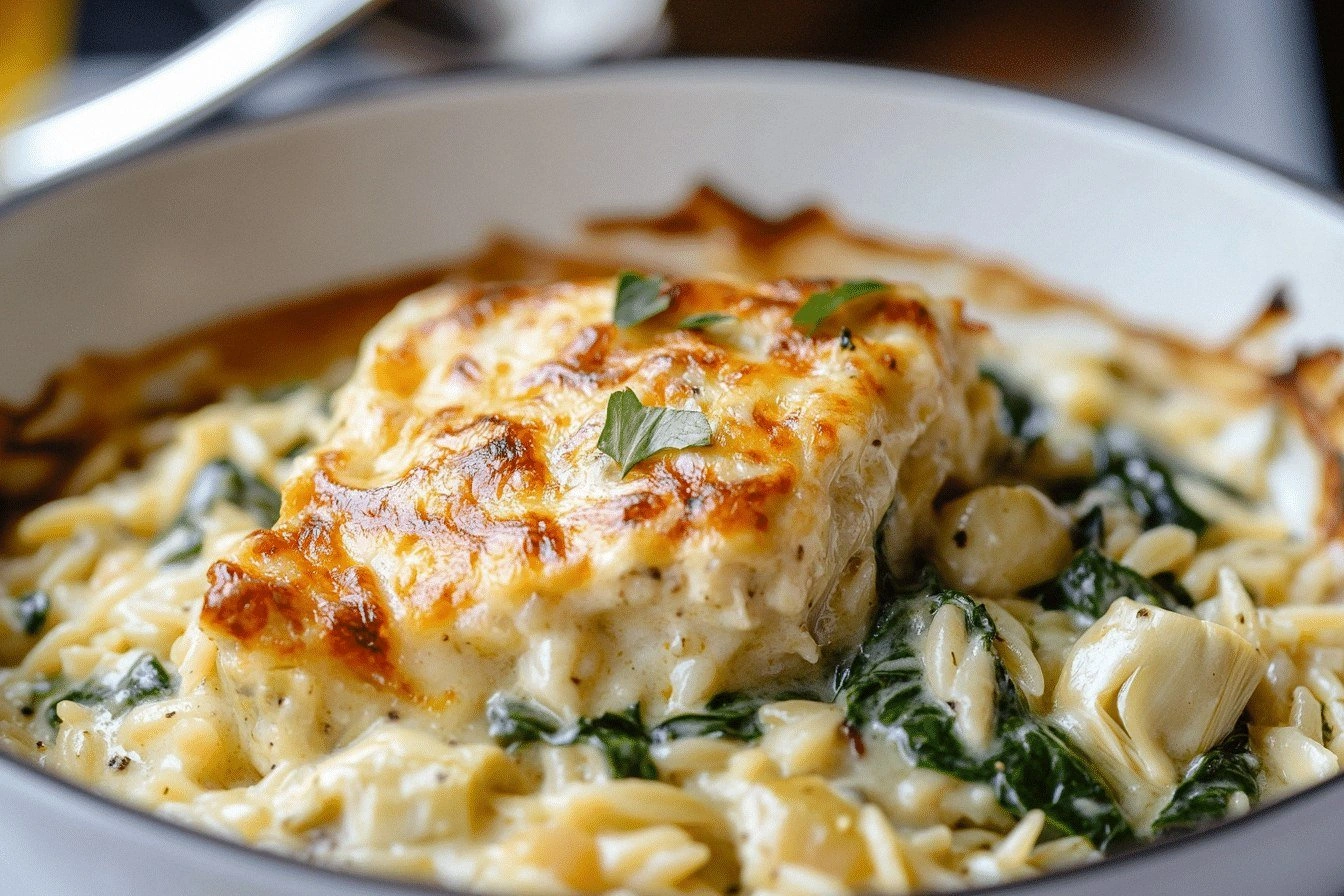
- Transfer to Oven: Preheat the oven to 375°F (190°C). Transfer the skillet to the oven and bake for 10 minutes, or until the top is golden brown and the edges start pulling away. This final baking step creates a delightful crust that adds texture to the dish.
- Serve and Enjoy: Remove the skillet from the oven and let it rest for 3 minutes. The rest period allows the sauce to set slightly, making it easier to scoop. Garnish with extra grated Parmesan, a drizzle of olive oil, or fresh herbs if desired. Plate the creamy, cheesy orzo, and watch as the first bite melts into a cloud of flavor.
That’s it— you did it. But hold on, I’ve got a few more tricks that will take this to another level. These insider tips will help you master the sauce, prevent clumping, and elevate the dish from ordinary to extraordinary.
Insider Tricks for Flawless Results
The Temperature Rule Nobody Follows
Many chefs believe that a high heat is the secret to a silky sauce, but in reality, low and steady is the way to go. When you add the cream cheese and Parmesan, keep the heat at low to prevent the dairy from separating. If the sauce starts to look lumpy, add a splash of milk or a teaspoon of flour to re‑emulsify. I once tried this with a high‑heat sauté and ended up with a curdled mess—don’t let that happen to you.
Why Your Nose Knows Best
Your sense of smell is your best ally in cooking. As the orzo cooks, the broth will release a fragrant steam that tells you exactly when the pasta is ready. If the aroma feels like a warm, buttery broth, you’re close to perfection. If it smells off or too dry, give it a splash of broth or water. Trust your nose; it’s a seasoned judge of flavor.
The 5‑Minute Rest That Changes Everything
After baking, let the dish rest for 5 minutes before serving. This allows the sauce to set slightly, making it easier to scoop and preventing it from sliding off the spoon. It also lets the flavors meld, so each bite is balanced. I’ve seen friends rush to the table before the rest period, only to find their sauce too runny. Patience pays off.
Cheese Swap for a Dairy‑Free Twist
If dairy is a no‑go, use a vegan cream cheese and a plant‑based Parmesan substitute. The texture will be similar, though the flavor profile will shift slightly toward a nuttier, earthier note. Make sure the plant‑based cheeses melt well; otherwise, the sauce may not coat the orzo evenly. I tested this version once, and it turned out surprisingly good—just keep an eye on the melting process.
Broth Alternatives for a Quick Fix
When you’re short on time, replace chicken or vegetable broth with a bouillon cube dissolved in water. This gives you the same savory depth without the wait. However, be careful with salt levels—bouillon cubes are often high in sodium. Taste as you go, and adjust seasoning accordingly. A friend once used bouillon and forgot to reduce the salt, resulting in an overly salty dish—lesson learned.
Creative Twists and Variations
This recipe is a playground. Here are some of my favorite ways to switch things up:
Sun‑Dried Tomato Burst
Add ½ cup of chopped sun‑dried tomatoes for a sweet, chewy pop that complements the artichokes. The tomatoes bring a deep, umami flavor that pairs beautifully with the Parmesan. Great for a Mediterranean vibe.
Spicy Kick
Stir in 1 teaspoon of red pepper flakes or a dash of hot sauce during the sauté. The heat will cut through the richness and add a lively edge. Perfect for those who like a bit of burn.
Herb‑Infused Variation
Add fresh basil or oregano at the end of cooking for a fragrant, herbaceous finish. The herbs add a bright, aromatic note that lifts the entire dish. Ideal for a springtime dinner.
Protein Power
Top the dish with grilled chicken, shrimp, or sautéed tofu for a protein boost. The added protein turns the dish into a complete meal and adds a satisfying bite. I’ve served this with grilled salmon on a quiet Sunday evening.
Cheesy Extra
Finish with an extra ½ cup of shredded mozzarella and broil for 2 minutes until bubbly and golden. The melted mozzarella adds a gooey, indulgent layer that kids and adults alike love.
Vegan Delight
Swap out the cream cheese for a plant‑based alternative and use nutritional yeast instead of Parmesan. The nutritional yeast gives a cheesy flavor without dairy. This version is just as creamy and satisfies the vegan crowd.
Storing and Bringing It Back to Life
Fridge Storage
Cool the dish completely before transferring it to an airtight container. Store in the refrigerator for up to 3 days. When ready to reheat, add a splash of milk or water to restore moisture and microwave on medium for 2 minutes, stirring halfway.
Freezer Friendly
For longer storage, place the cooled dish in a freezer‑safe container and freeze for up to 2 months. Thaw overnight in the refrigerator, then reheat as described above. The texture remains creamy and satisfying.
Best Reheating Method
Reheat on the stovetop over low heat, stirring frequently and adding a splash of milk or broth until the sauce is silky again. Avoid high heat, which can cause the cheese to separate. A quick microwave at 30-second intervals also works if you’re in a hurry.